
At Studio PALLAVI, this isn’t just a saying. It is a way of working, a way of listening, and perhaps more importantly, a way of living with design. Long before the studio took form, before objects, collections, or exhibitions, there were two parallel journeys, each shaped by memory, curiosity, and an evolving sense of what design might become.
For Srishti, it began with a deeply personal inspiration, one that guided her toward design as a way of creating continuity: building something that carries meaning across time. This impulse was rooted in the memory of her sister Pallavi, as an act of continuing what she stood for, ensuring that grief wouldn’t be the end of the story. For Pamaljeet, trained as an architect, the path grew from a strong pull towards understanding the intricacies of how people interact with products and a desire to design not for oneself, but for others. He arrived at design through the discipline of space, finding clarity in genuine conversation with the person who would eventually live with the object. His work never stopped at function or proportion; it pressed further, into feeling. Their paths crossed at the National Institute of Design in Ahmedabad, where conversations moved between systems, objects, and possibilities. There was no singular moment that defined the beginning of the studio. Instead, it formed gradually, shaped by shared values and an instinct to create something that felt both deeply rooted and outward-looking. What eventually emerged was not just a brand, but a design practice grounded in thoughtfulness, one that resists excess and questions the need to create at all. There’s a convincing stillness to how the studio works with material. Especially with Sheesham wood, or Tahli as it’s called in Punjab, a material not chosen for convenience but discovered through context. Found across agricultural lands, shaped by time, and sourced only after it has lived its full life, the wood carries a history that Studio PALLAVI does not attempt to erase.
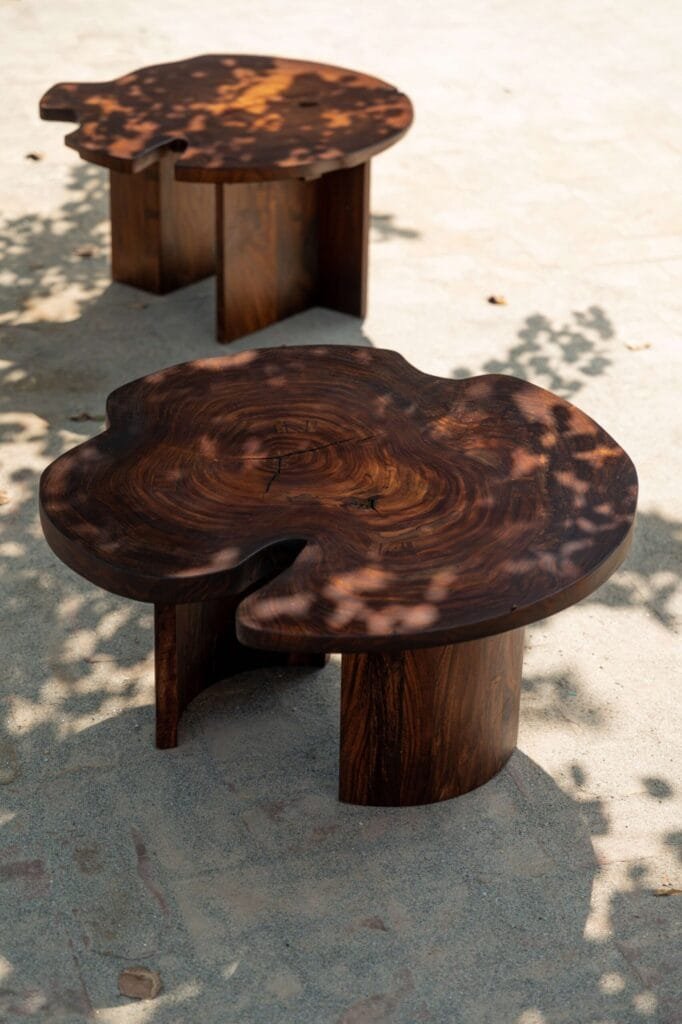
All across Punjab’s farmland, you’ll see Sheesham trees planted along field boundaries for shade. They grow slowly, over generations. They aren’t plantation timber, and they aren’t farmed like crops. They’re just part of the working land. When a tree has lived its full span, it becomes available. It is not a material that finds itself in photographs shaped by the soft, biscuity tones that dominate interior feeds. It is dense and knotted and marked by its own history, and Studio PALLAVI has chosen it precisely for that reason. When you season the wood naturally, letting it take the time it needs, you end up with timber that’s stable and full of character in a way kiln-drying can’t match. The wood’s cells relax instead of collapsing. The grain tightens without being forced. By the time a chisel ever touches it, the material has already worked through its own internal stresses. The simple truth is, if you want objects that age beautifully, you have to make objects that are meant to last. Each tree is found, studied, and slowly worked on. It’s cut into planks, seasoned naturally over the years, turned, and cared for until it’s finally ready. The whole process is deliberate, almost meditative. And somewhere along the way, something shifts. The designer’s role changes. The plank begins to lead. What the wood wants to become becomes just as important as what the designer had in mind.
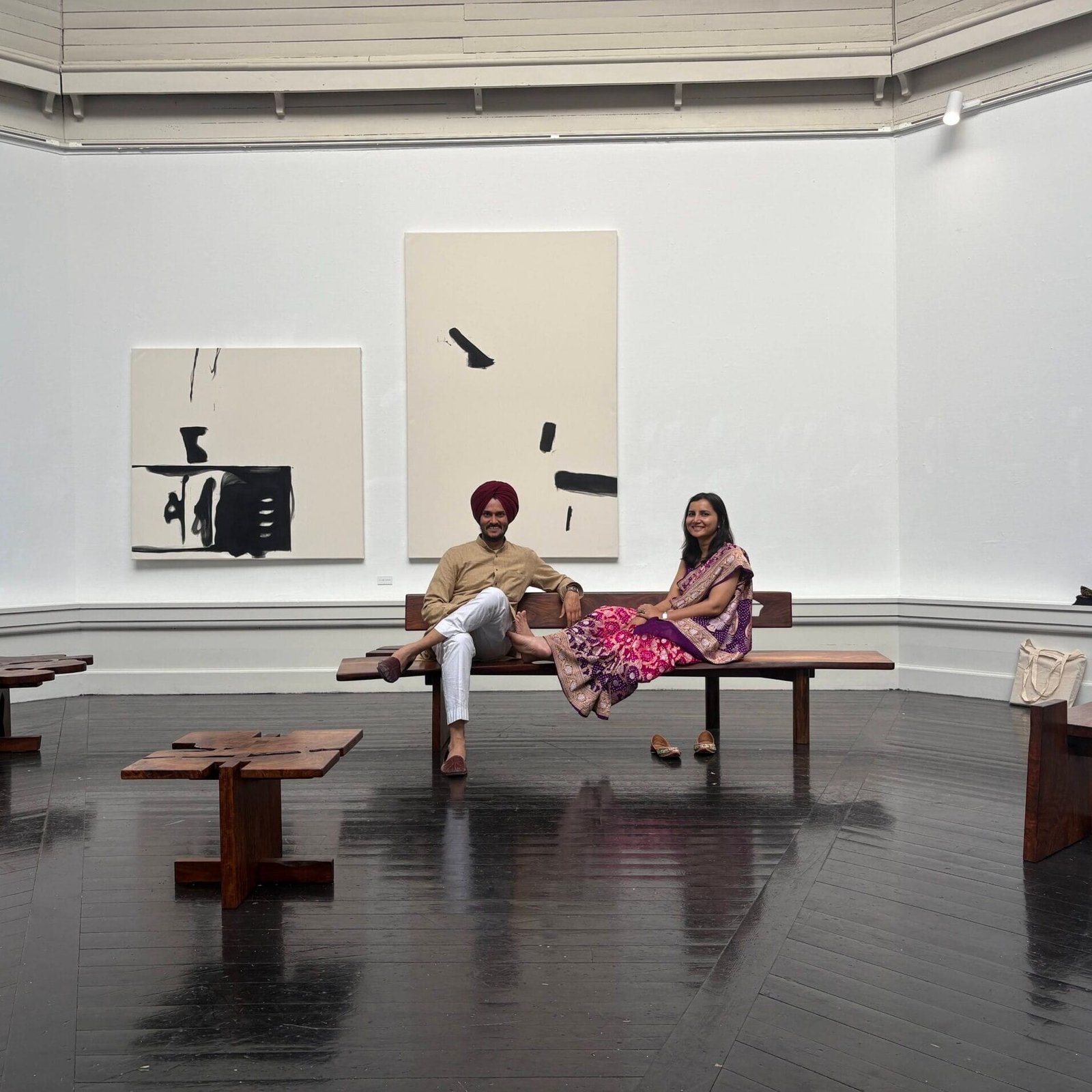
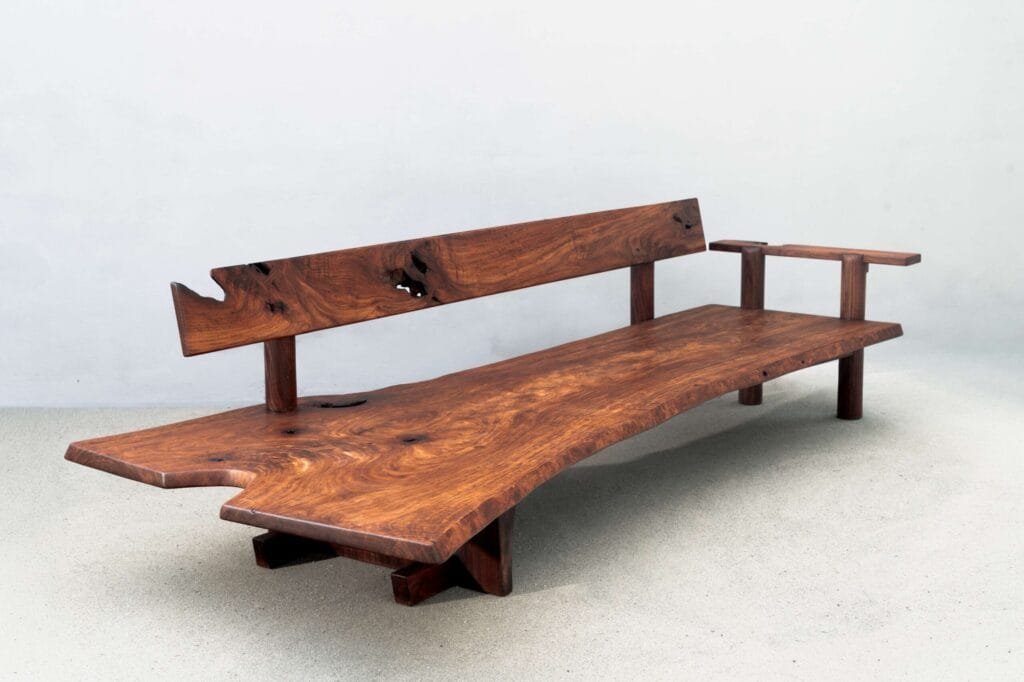
This belief shapes the emotional language of their work. Spaces are imagined not as curated images, but as environments where life can unfold in its natural, unpolished form. They want things that carry their own history, age beautifully, and feel like they belong to the person but not to trends. And ‘Holding Space’ in a more personal sense has always been what Studio PALLAVI is about. Making room for life to unfold, without trying to control how it does. The objects they make aren’t trying to occupy a space; they’re there to belong to one. The process behind these objects reflects the same integrity. Traditional joinery replaces mechanical fasteners. Natural oils replace synthetic finishes. Craftsmanship is not hidden but expressed visibly in the final form as much as in the making. The collection draws from two long-standing South Asian traditions: draped garments and pre-colonial floor-based living. Just as a sari, dhoti, or dupatta can be worn in multiple ways, adapting to different people and occasions, low pedestals and platforms once served a range of purposes without being tied to a single function. A seat could become a table, a surface for gathering, or a place to rest. In both traditions, use was shaped by people and context rather than prescription.
These learnings come together in furniture that resists fixed labels. Varying in height yet capable of supporting human weight, each piece invites multiple ways of being used and occupied, encouraging interaction rather than dictating it. The timber follows the same philosophy. Instead of forcing the tree into rigid orthogonal forms, its natural growth is respected, allowing its unique shape and character to inform the final object. The result is a collection that reinterprets these enduring ways of living into contemporary furniture, embracing adaptability, material honesty, and openness. This is why Srishti and Pamaljeet decided to do ‘3 days of design ’, showcasing their collection ‘Holding space’ at the exhibition presented by ARK journal during ‘3 days of design’ 2026 in Copenhagen, which reimagines inherited design wisdom through contemporary furniture, where tradition meets a refined modern sensibility. The exhibition presents four pieces: Rafaq, Chaukor, Matsya, and Aks, exploring dualities of symmetry and fluidity while celebrating the raw honesty of materials and craftsmanship. Inspired by the movement of South Asian garments and floor-based living inherent to India, the collection reimagines furniture as interactive, body-led forms rather than fixed objects. At its core, it reflects a slower, intentional way of living where design becomes a vessel for memory, culture, and contemporary relevance.
And perhaps that is where the studio’s work finds its most distinctive voice. The way it allows life to happen around it.
Today, as Studio PALLAVI continues to evolve, presenting its work on international platforms and engaging in larger conversations around design, it carries forward the same foundational belief that design must remain life-centric and not just human. That it must be rooted in context, aware of its impact, and responsive to the lives it becomes a part of. Indian design holds an interesting place in global conversations. There is pressure from markets, collectors, and others to look “authentically Indian,” which often ends up squeezing a rich, layered, and even contradictory tradition into a handful of easy-to-export symbols. Srishti and Pamaljeet aim for something different from this. Neither nostalgic nor eager to impress. They don’t copy old forms, nor do they abandon them for something more internationally acceptable.