
Marking its 26th Foundation Day, Team One Architects (TOA) has unveiled the master plan for the LFU University campus, set amidst the Ghatangiri Hills in Dharashiv (Osmanabad), Maharashtra.
Backed by an investment of INR 3 crore in land acquisition and over INR 8 crore earmarked for development, the project reflects the firm’s continued commitment to creating impactful, world-class infrastructure in regions that have historically remained underserved.
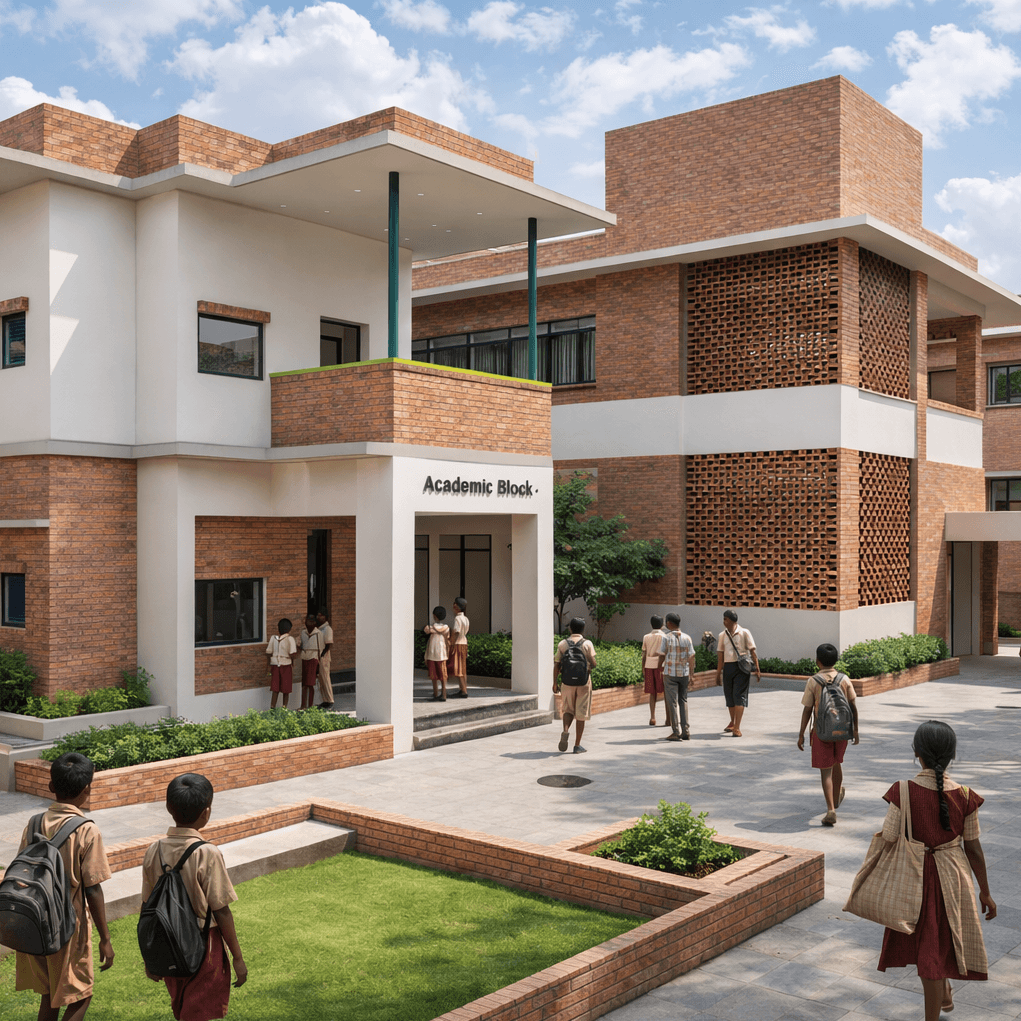
Planned across 5.5 acres, the campus will be developed in phases, with Phase 1 covering 75,000 sq. ft., followed by an additional 33,000 sq. ft. The design adopts a “home away from home” philosophy, expressed through a warm, human-scaled architectural language. The campus is envisioned as a cluster of independent built forms interconnected by a central green spine that doubles as both a social and movement corridor.
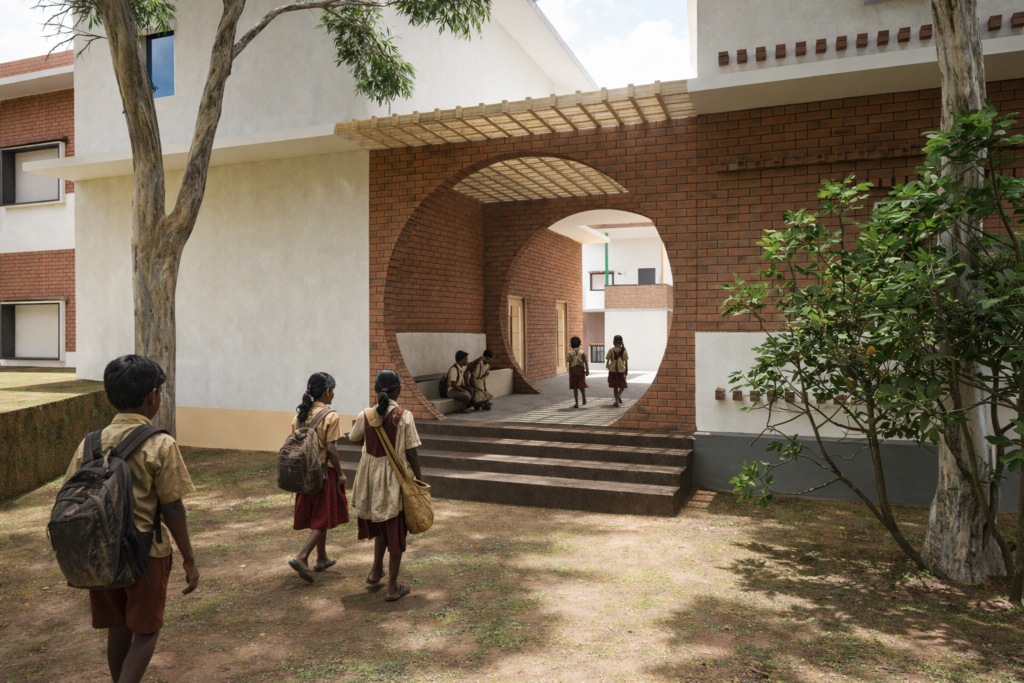
Drawing inspiration from rural settlement patterns, the master plan integrates smart classrooms, residential facilities for approximately 200 students, recreational zones, and ecologically responsive features. Together, these elements aim to create a holistic, design-led academic environment.
The institution is primarily geared towards aspiring medical students from Maharashtra’s agrarian heartland, many of whom are first-generation learners. Beyond academic infrastructure, the campus seeks to nurture civic awareness and ethical responsibility, shaping graduates equipped to contribute meaningfully to society.
Parish Kapse, Co-Founder and Director at TOA, stated that the initiative reflects the firm’s longstanding belief in architecture as a tool for social impact, particularly in advancing access to education and equitable development.
Aditya B. Yamsanwar, Director at TOA, added that the project reinforces the studio’s philosophy of extending quality design beyond privileged contexts, positioning architecture as a means to bridge opportunity gaps and enable inclusive growth.
With this project, TOA strengthens its focus on educational and community infrastructure as it enters its next phase of practice, setting a benchmark for purpose-driven institutional design that prioritizes both built form and social impact.