
A rooftop restaurant where light, material and movement shape a cohesive and quietly expressive dining experience.
Midori, located in Hyderabad and designed by TEVA Architects, is conceived as a rooftop dining environment where light, material, and collective use come together within the constraints of an existing shell. Spread across 8,300 square feet on the fifth floor, the project transforms a pre-existing bar into a spatial sequence that balances openness with enclosure and structure with atmosphere. Rather than imposing a new identity, the design works through adaptation, allowing the architecture to unfold gradually through experience and movement.
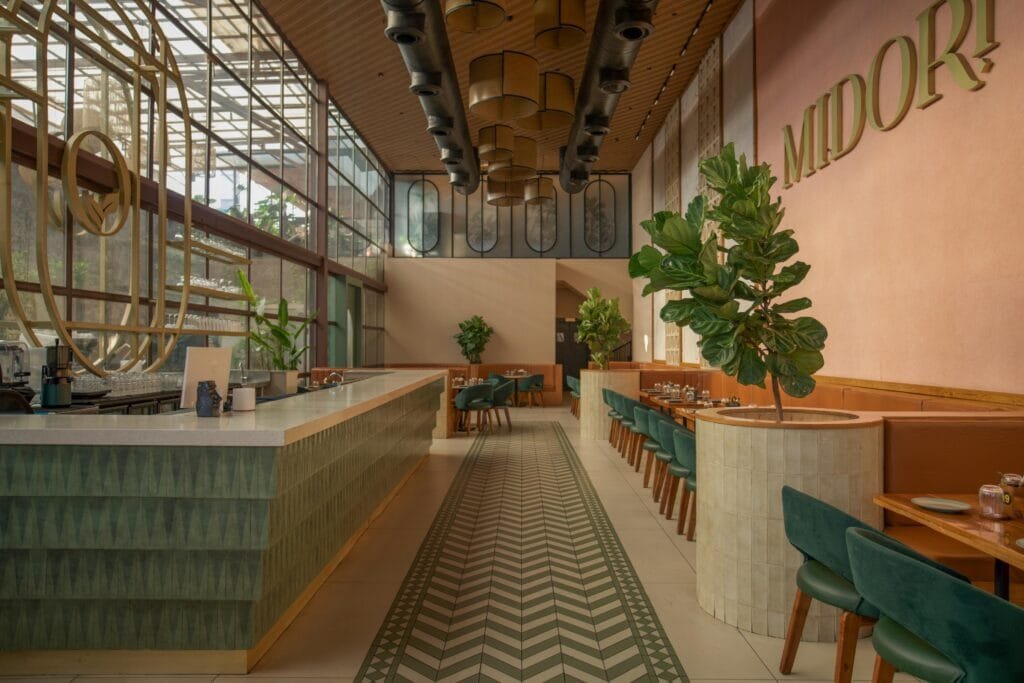
“The name Midori, meaning green, is interpreted as a sensibility rather than a literal theme. The client’s palette of beige, orange, and warm earthy tones is retained and extended across surfaces, furniture, and detailing, ensuring continuity with the brand. Green is introduced subtly through planting, tonal shifts, and pattern references, allowing the concept to emerge through layers rather than direct application. This approach creates a cohesive and grounded environment where colour operates atmospherically rather than visually dominating the space.” Ar. Vamsi Ballepu, Principal Architects, TEVA Architects.
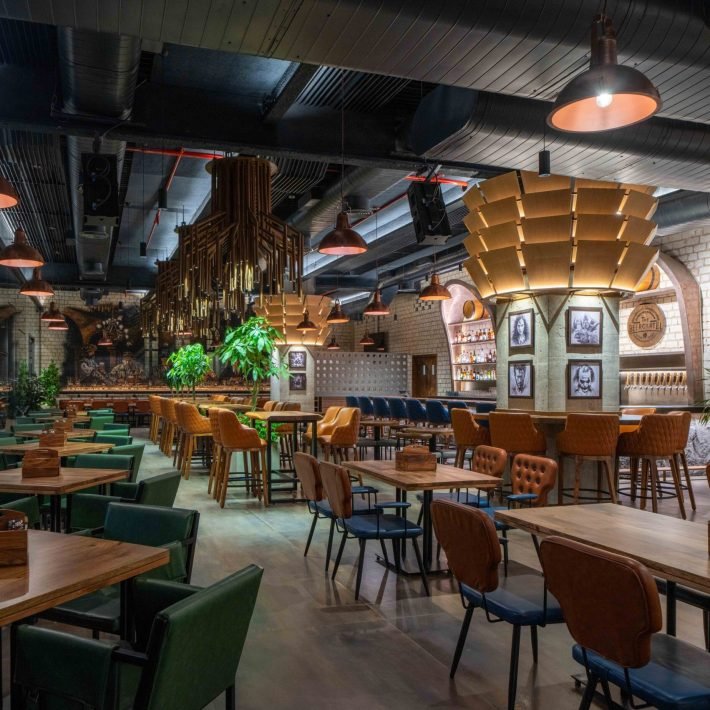
Working within an existing structure, the project embraces its constraints as design drivers. The original roof and service lines, including exposed HVAC ducts, are retained and integrated into the overall language. Limitations of load, height, and budget inform decisions at every scale, resulting in an architecture that is efficient yet expressive. Repetition, modularity, and material consistency establish order, while variations in surface articulation introduce depth and richness. The design does not conceal the existing condition but reinterprets it, allowing infrastructure and architecture to coexist seamlessly.
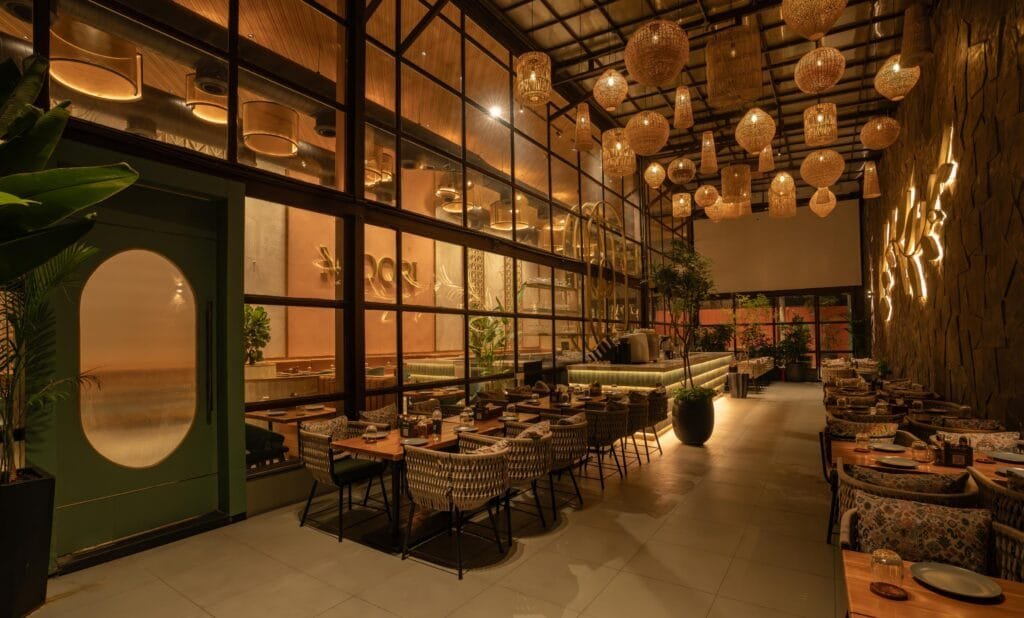
“The plan is organised into two primary zones, indoor and outdoor, which mirror each other in both layout and intent. This symmetry creates clarity in movement and allows the space to accommodate both intimate seating and larger gatherings. A mezzanine level extends this continuity, offering an elevated vantage that visually connects both zones and reinforces the sense of a shared environment.” Ar. Tejaswi Poludasu, Principal Architects, TEVA Architects.
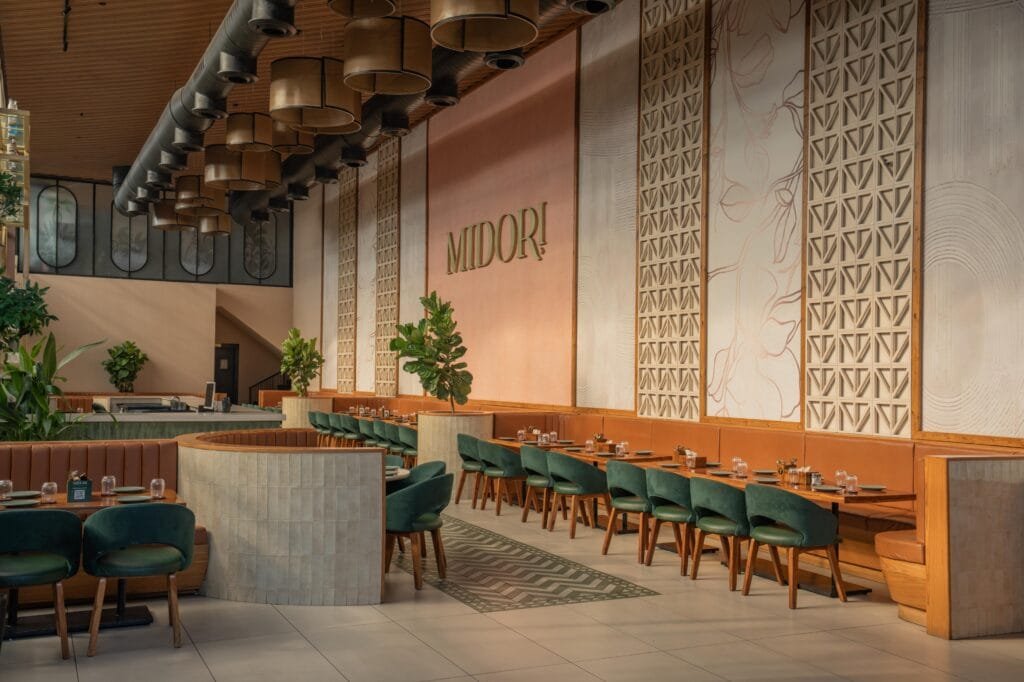
Within the indoor space, the architecture is defined by layered surfaces that introduce rhythm and tactility. A feature wall with customised wallpaper panels in dual patterns is framed within a structured grid, allowing variation without disrupting coherence. Leaf vein panels translate the central idea into a tactile relief, embedding the concept into the vertical plane. The floor, articulated through customised subway tile patterns, becomes an active surface that guides movement and visually links seating clusters, planters, and the bar.
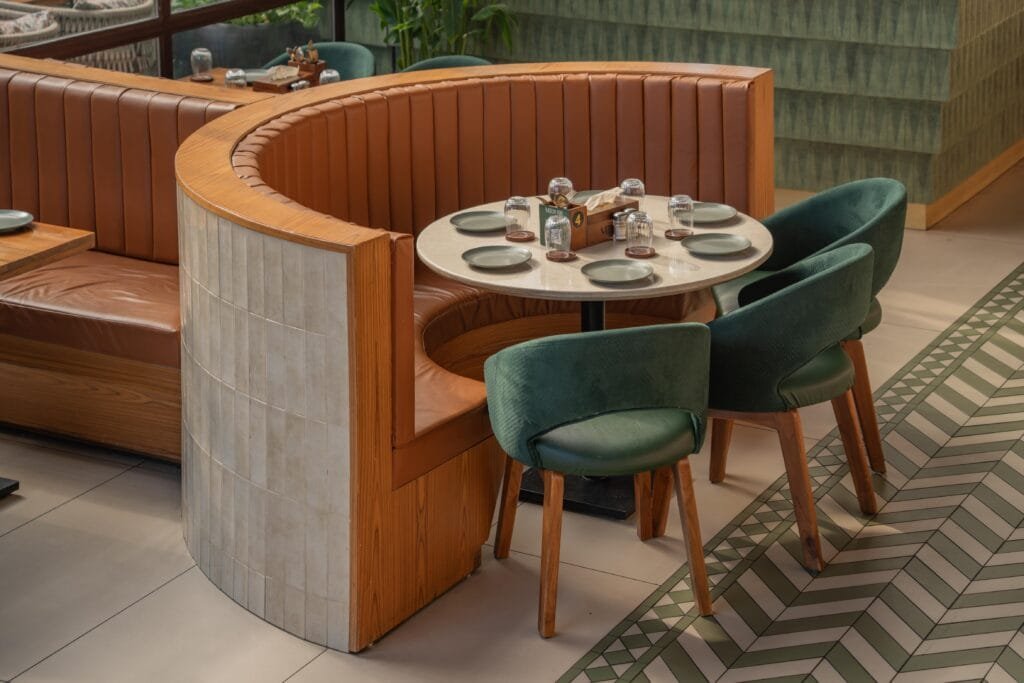
Seating is organised through curved modules that form semi-enclosed pockets, softening the linearity of the plan and encouraging collective use. Upholstery in warm tones is paired with green accents, creating a controlled contrast against the neutral base. Table tops in marble and wood introduce shifts in tactility and visual weight, reinforcing the layered character of the interior.
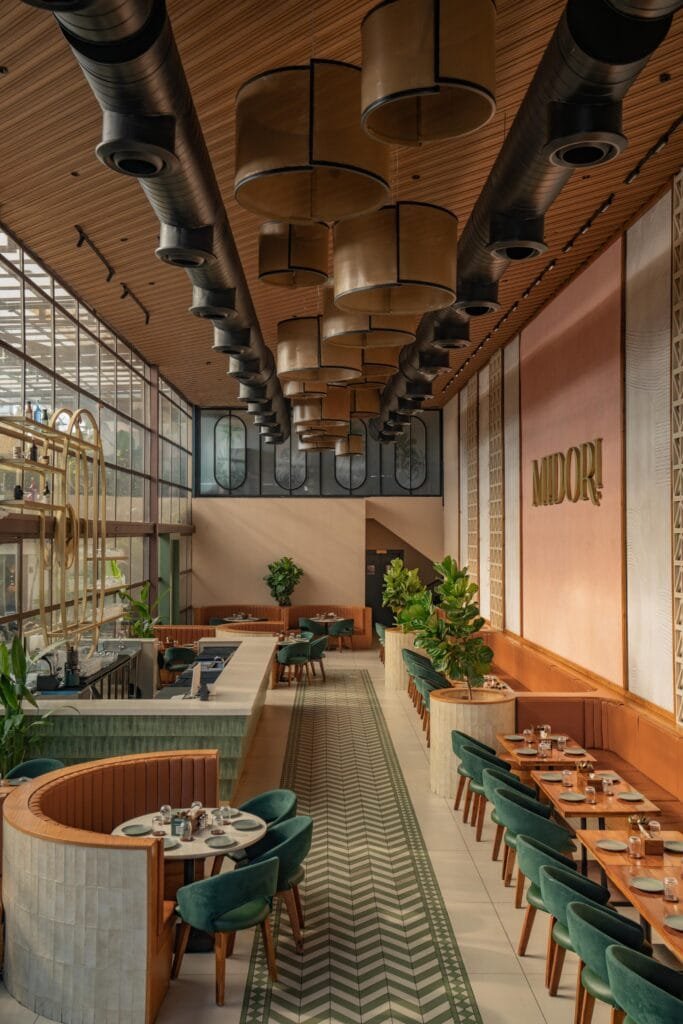
The mocktail bar acts as a linear anchor, finished in subway tiles and topped with a marble counter. Behind it, a wall-mounted installation of the Midori logo functions as both a graphic and a storage system. Above, cylindrical lighting fixtures align with exposed ducts and a slatted ceiling, creating a cohesive ceilingscape. Daylight enters through a double-height glazed edge made of polycarbonate sheets, allowing filtered light to penetrate deep into the space while addressing structural constraints.
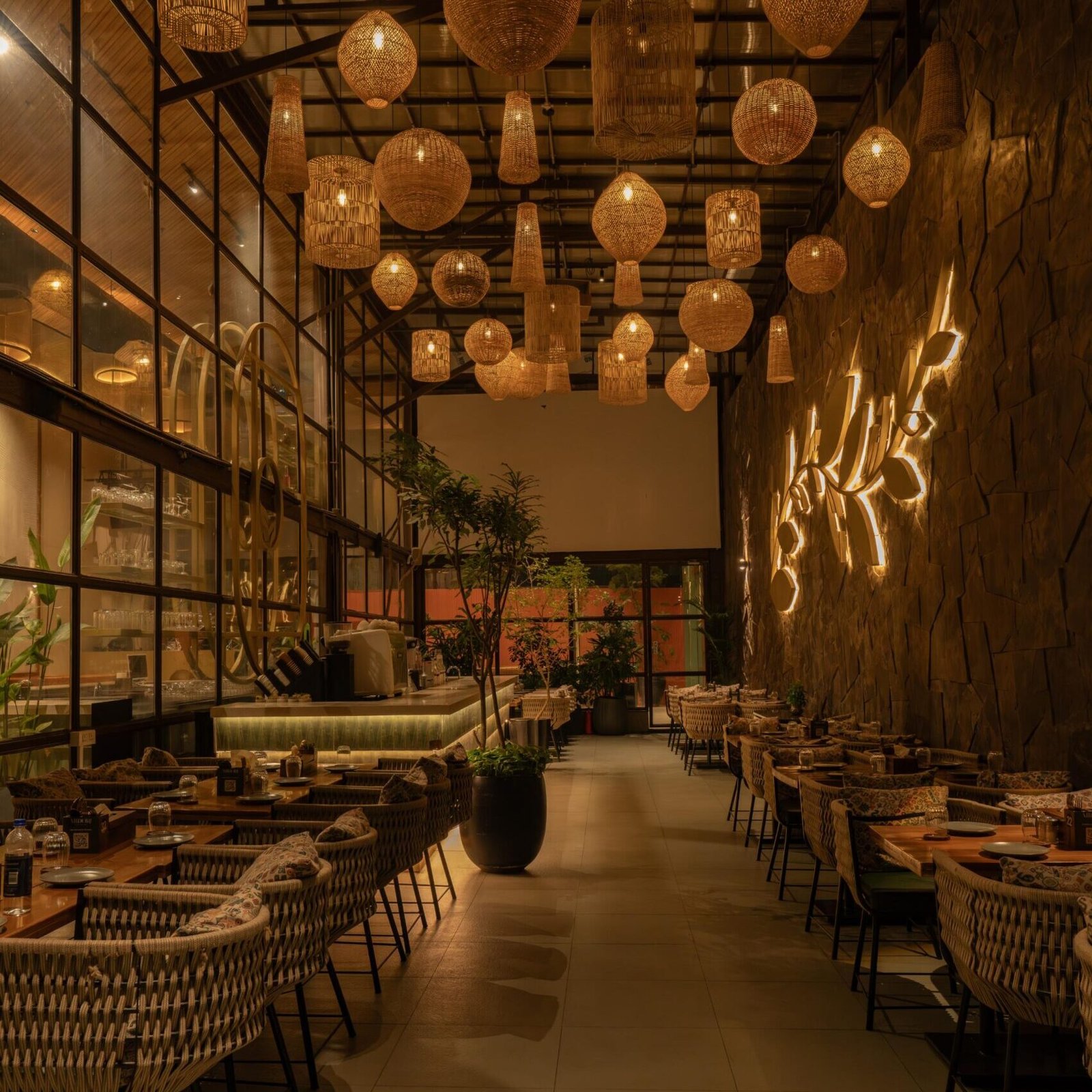
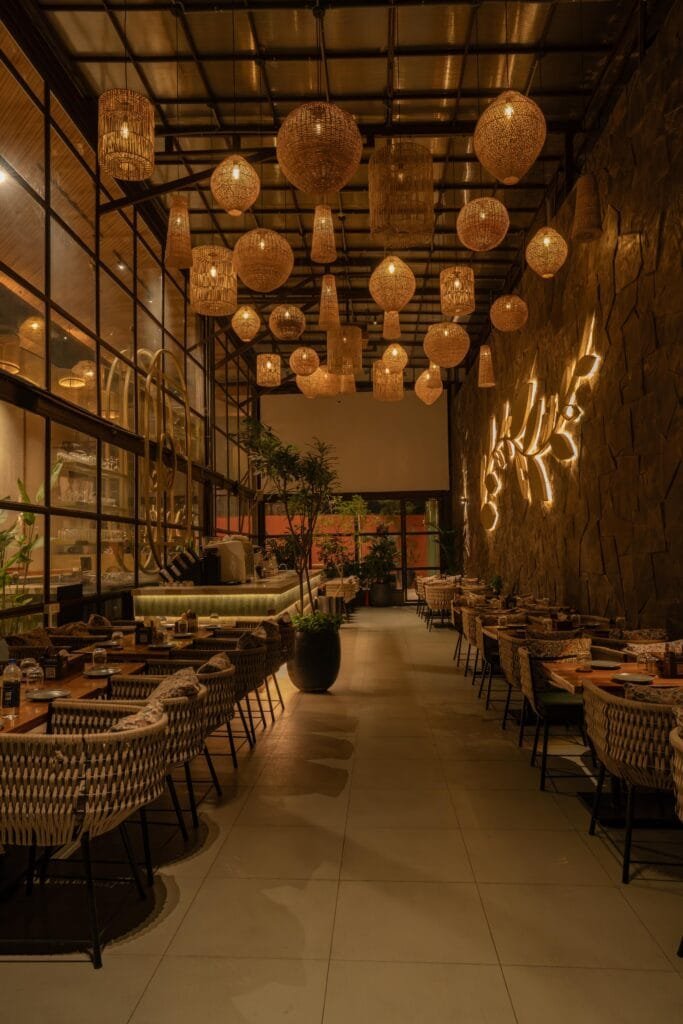
The outdoor area shifts toward a heavier material expression, anchored by a large wall in African granite random rubble that forms a textured backdrop. A CNC-cut installation derived from the leaf motif is layered onto this surface, introducing precision against the roughness of the stone. The cocktail bar mirrors the indoor bar in placement, maintaining the spatial symmetry while adapting to the outdoor context.
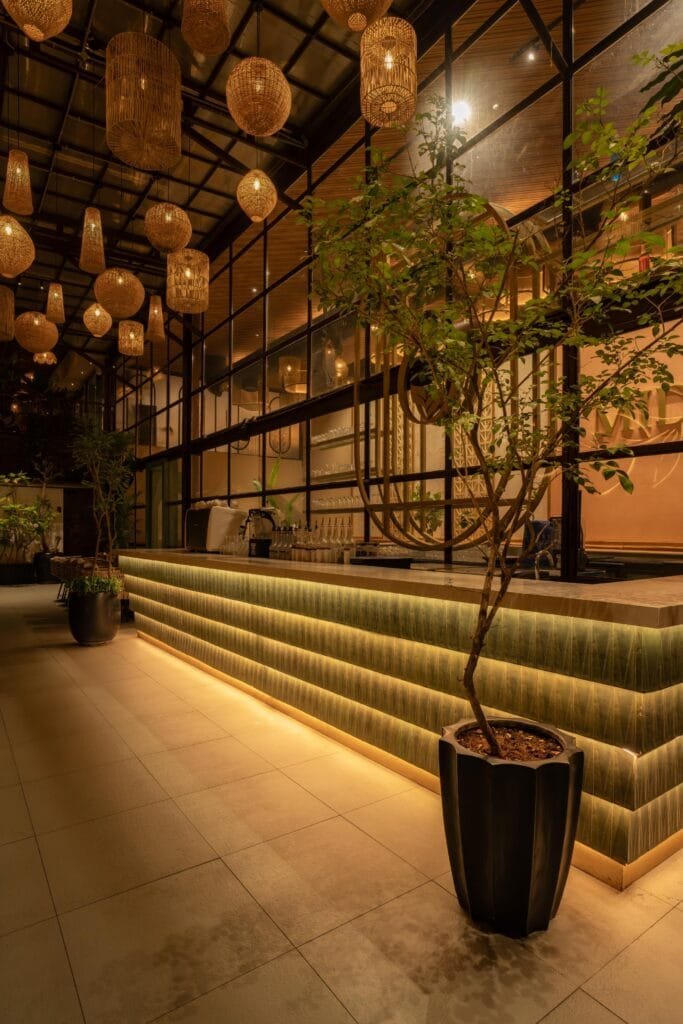
Overhead, lighting elements sourced from local weavers create a suspended canopy that diffuses light and introduces a crafted quality. A polycarbonate skylight allows natural light to filter through, while Kota stone flooring provides a subdued base that contrasts with the richness of the vertical surfaces. Furniture adopts a more relaxed language with woven textures and muted frames, with cushions reintroducing the project’s colour palette in a softer manner.
As the space transitions into evening, lighting begins to articulate surfaces and edges, creating a layered and immersive atmosphere. The inclusion of a large screen allows the space to function as a social setting for shared viewing and gatherings. Midori ultimately operates as a dialogue between indoor and outdoor, between pattern and material, and between light and occupation, negotiating constraints through a design approach that is measured, cohesive, and deeply attuned to experience.